Pastry pairs.
Pastry pairs.
Pastry pairs
The memory matching game to help children gain literacy in tactile graphics and texture differentiation.
Project Timeline
8 Weeks
Year
10/2025
Project Type
Pair
research
co-designer
Ka (Kai) Yat Li
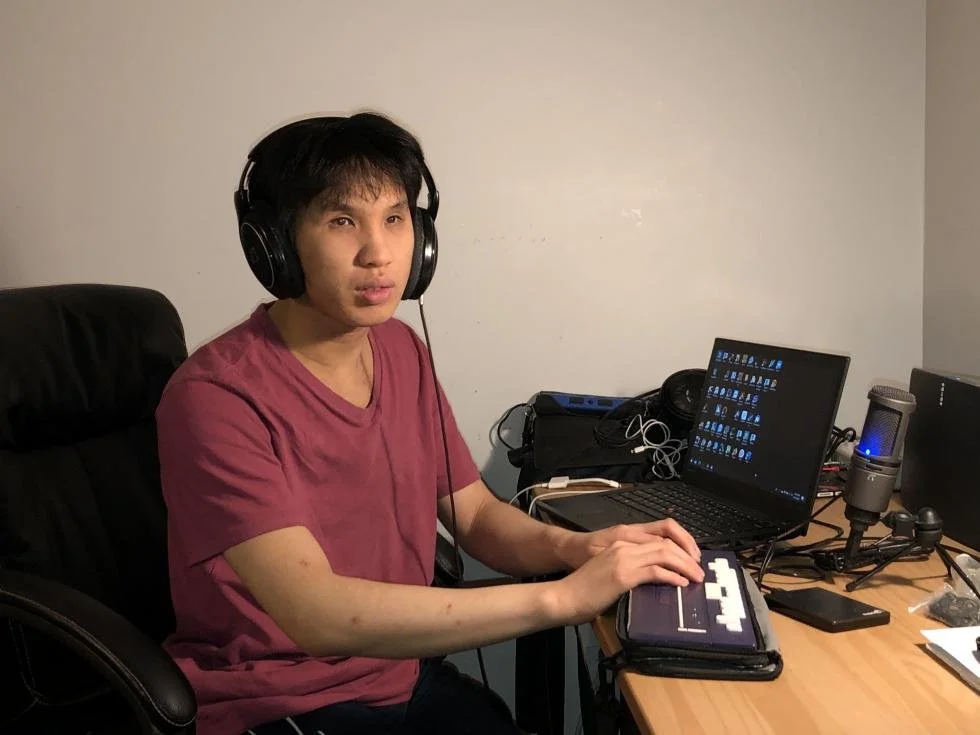
Ka was our co-designer and a central voice in shaping Pastry Pairs. His lived experience with tactile accessibility guided key decisions, from material choices to usability details, ensuring the game remained intuitive and inclusive.
Throughout this class, we have learned the biggest issues that low to no vision individuals face when it comes to perception and understanding the world around them.
We have learned how to write braille and produce tactile graphics, which are useful tools for the impaired who are trying to learn media through their own “vision.”
Background
Mainstream board games rarely include tactile accessibility, leaving blind and low-vision players with limited options for independent, multisensory play. Lucy had already created a similar matching game for a previous studio course, and we wanted to expand on an existing design to make it more accessible and tactilely interesting.
challenges
user guide
From 2d to 3d
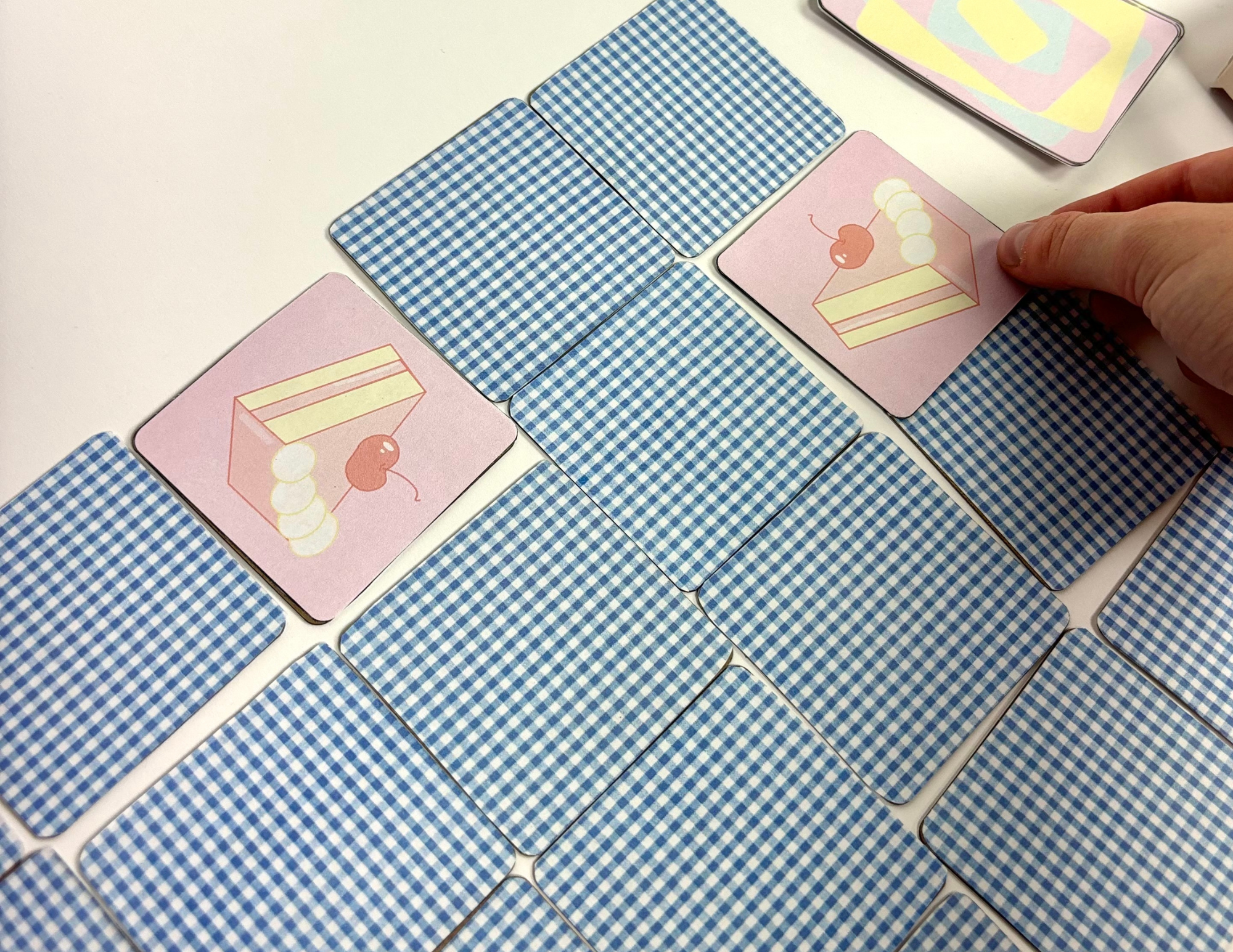
My partner, Lucy Blood, had designed a children’s memory game for a previous studio course, and we thought it would be a perfect opportunity to take an existing product and spin it to have an angle based on tactile literacy and inclusive design.
goals
Create Pattern Pairs, a tactile memory game that reimagines classic gameplay and teaches tactile literacy through textured tiles, braille labels, and non-visual instructions.
Foster accessibility, independence, and shared participation by ensuring the game is intuitive, inclusive, and replicable for wider distribution.
Process
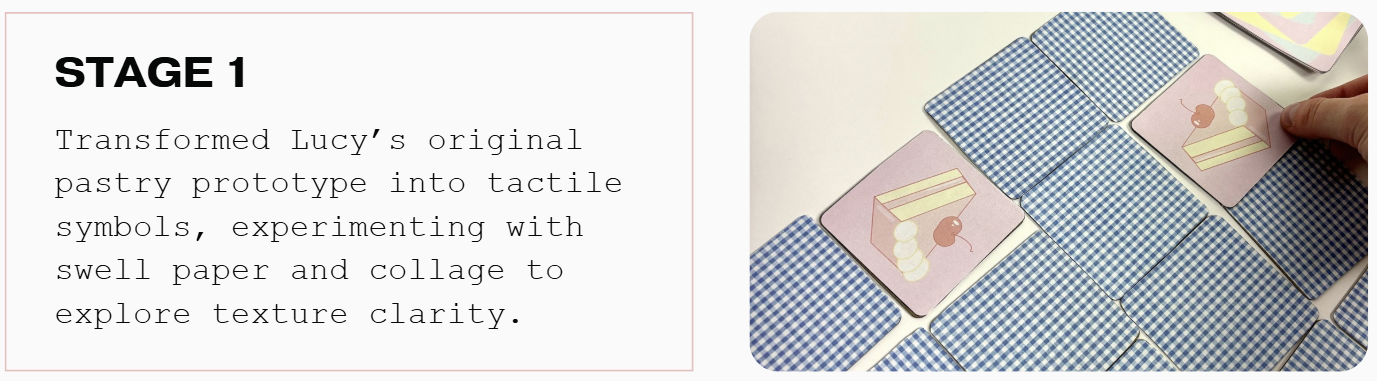
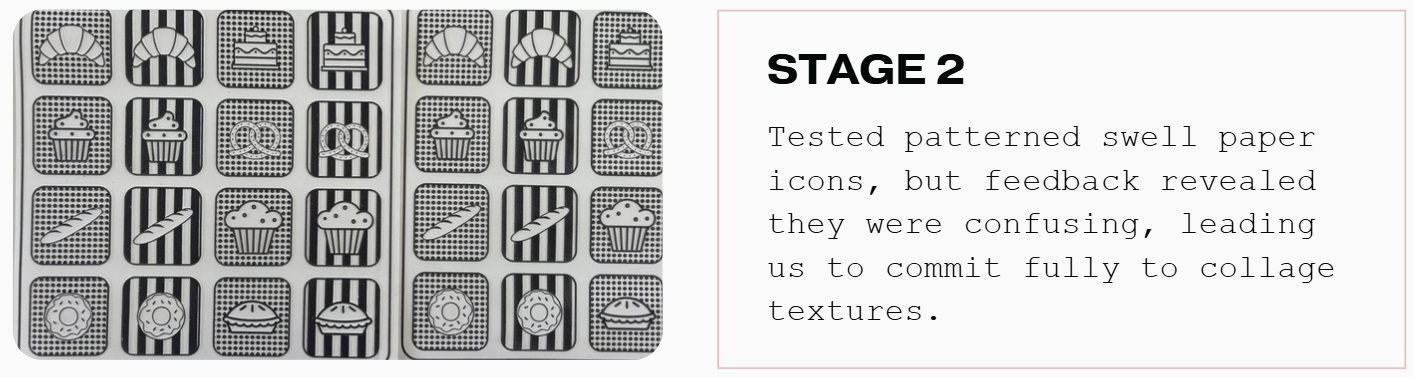
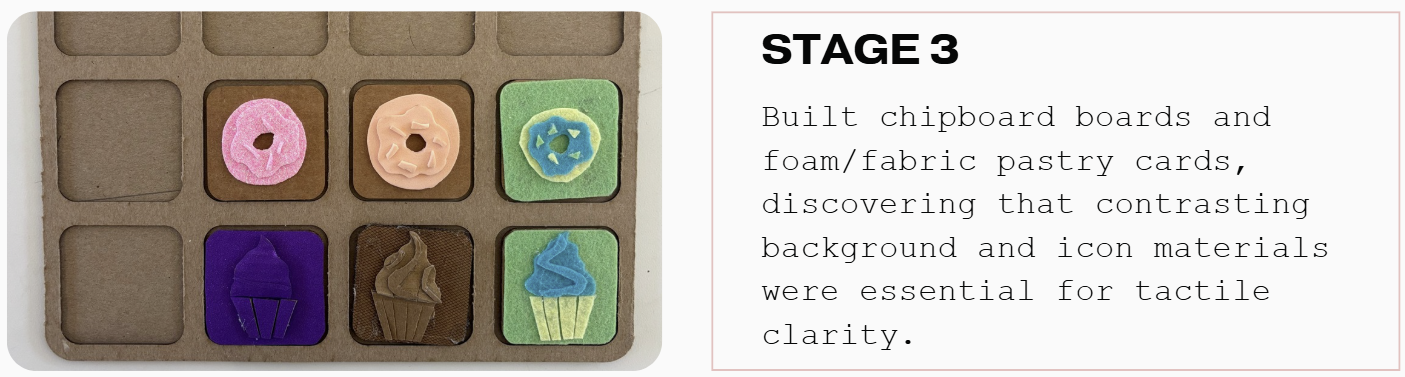
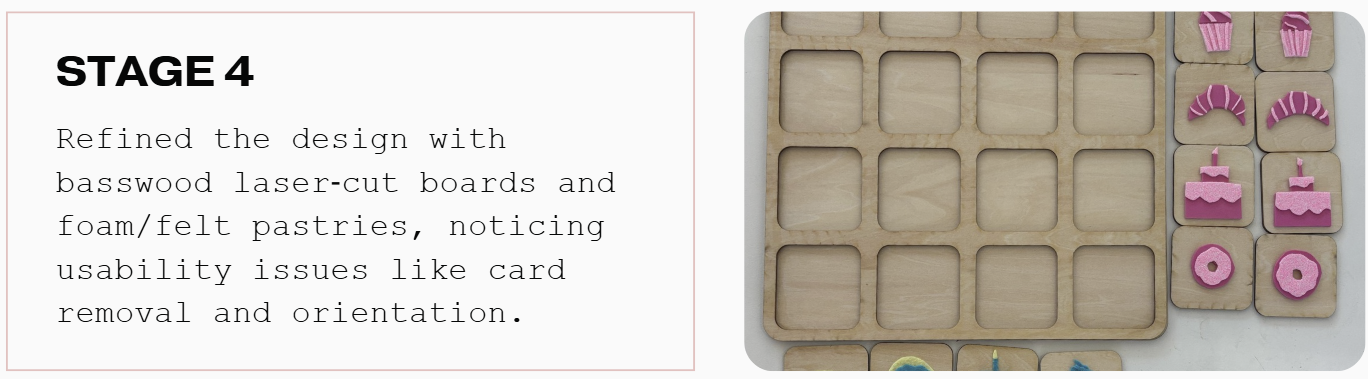
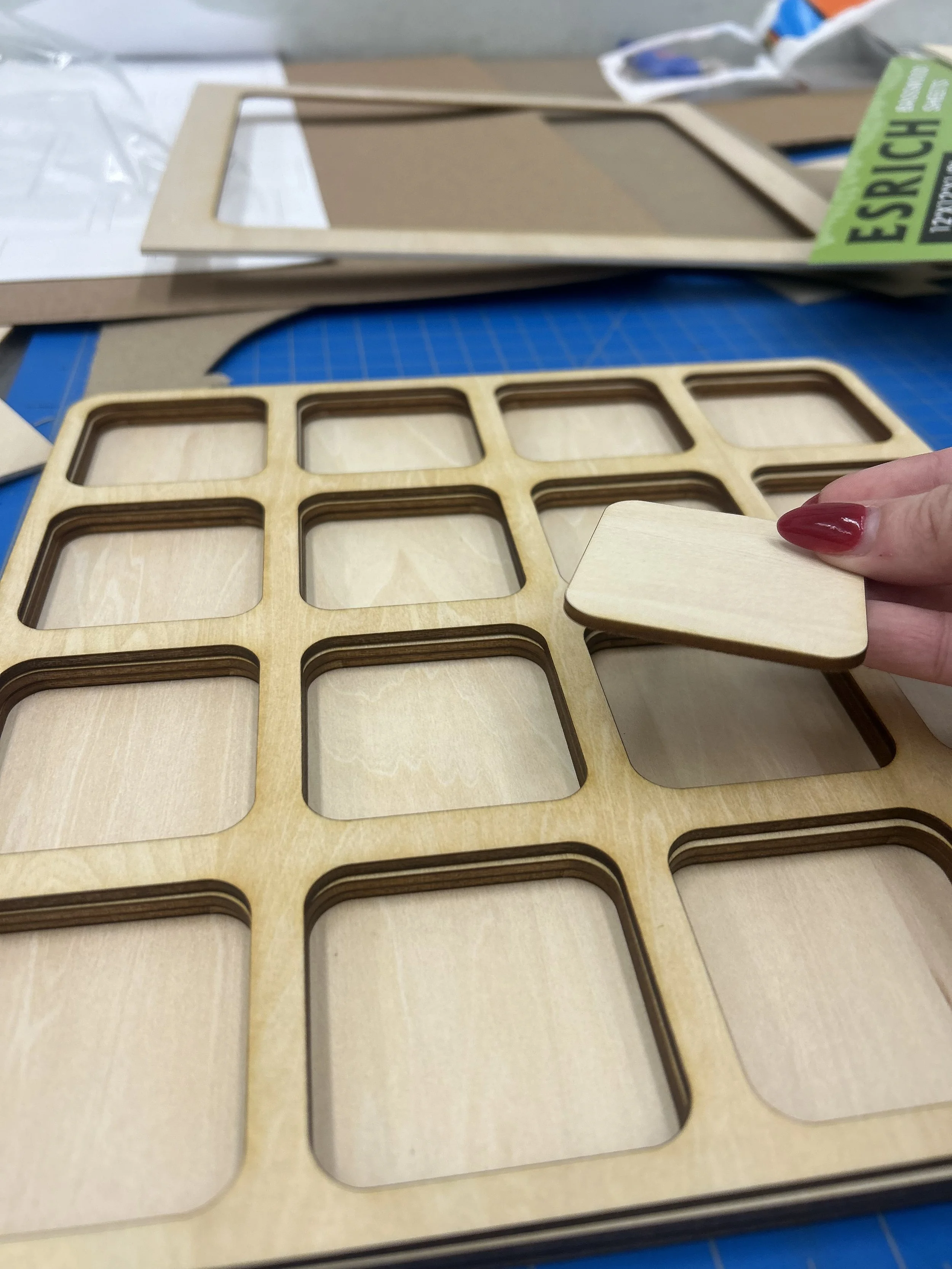
One challenge we faced throughout this process was getting different feedback from multiple people. Due to the range of feedback we were receiving it was difficult deciding which feedback to take and what to not go forward with. Because Ka was our co-designer we tried our best to take all feedback and insight he had and would go to him when we were torn about whether or not we should change specific aspects of the design. Getting feedback from both Ka and Ellashae was extremely helpful and the feedback they both gave helped make our final product more accessible.
final design
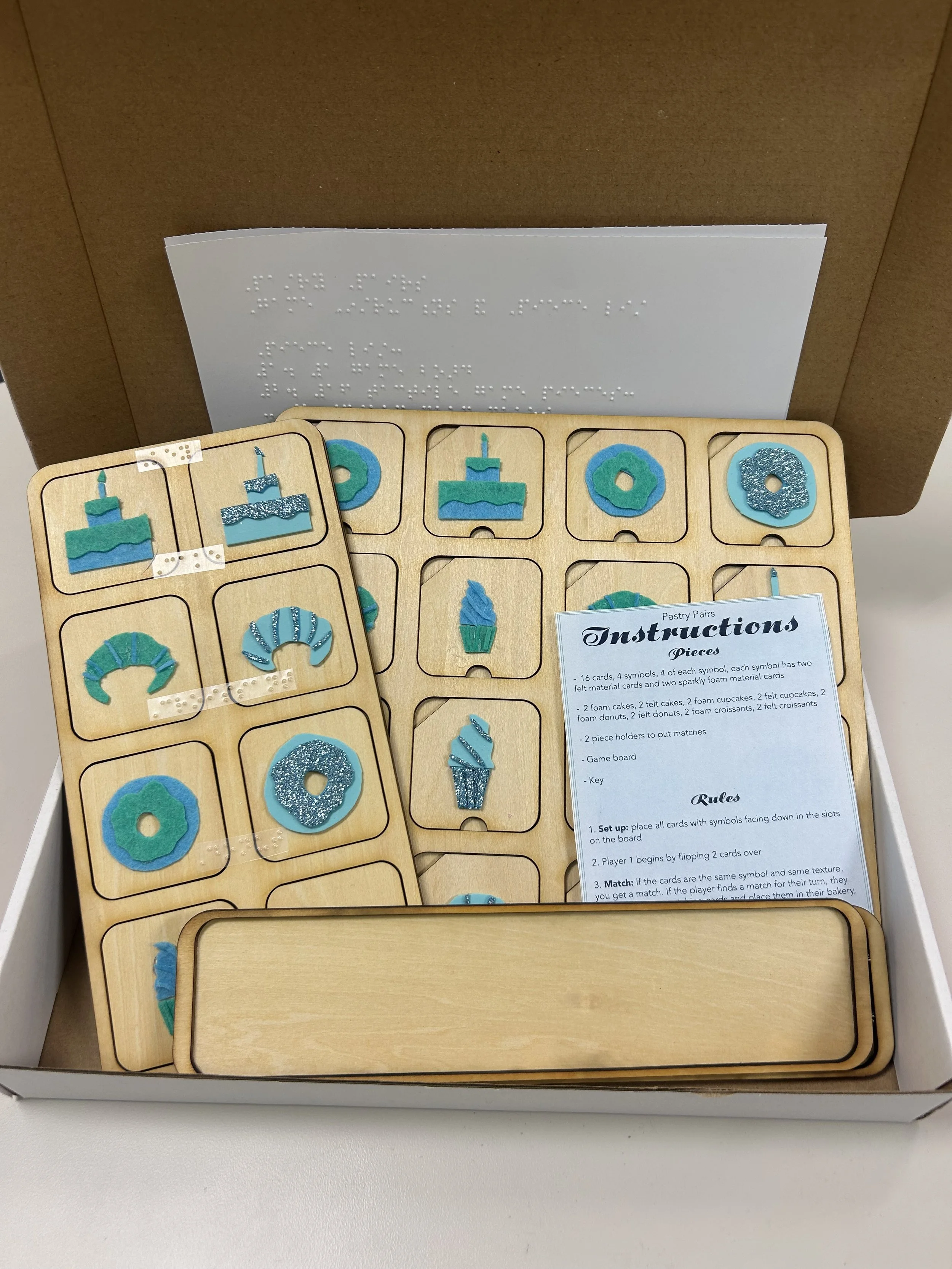
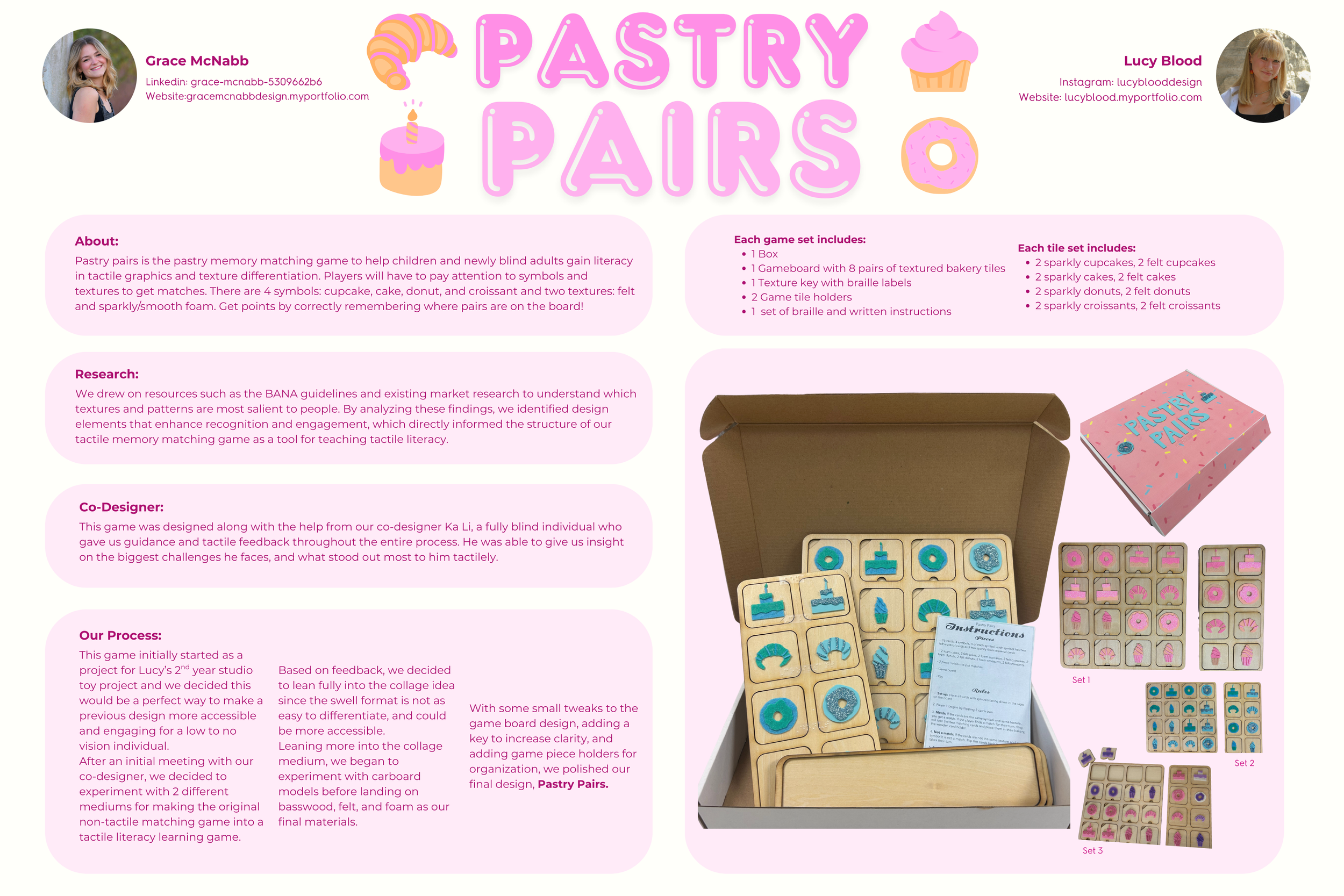
contents
-
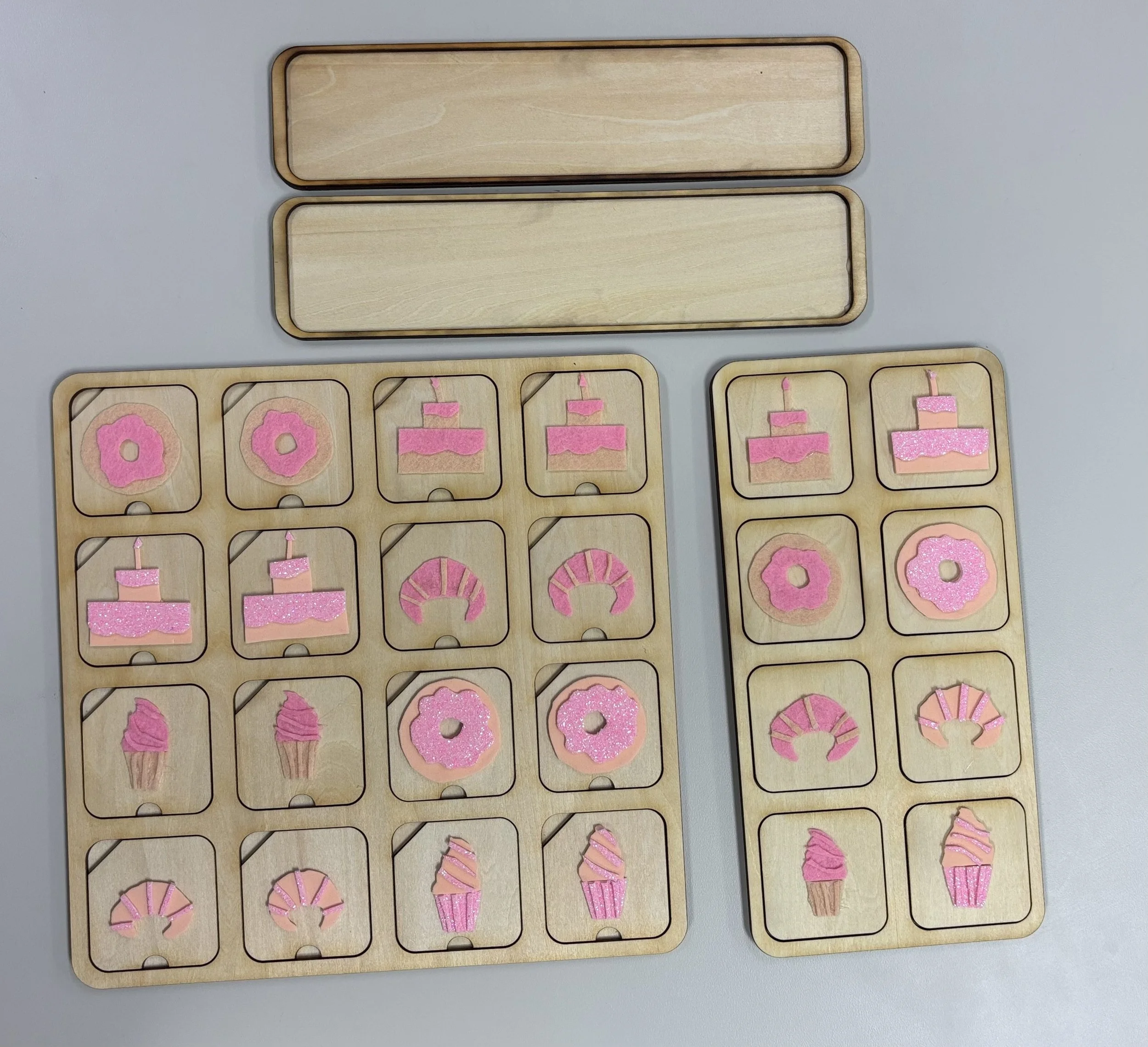
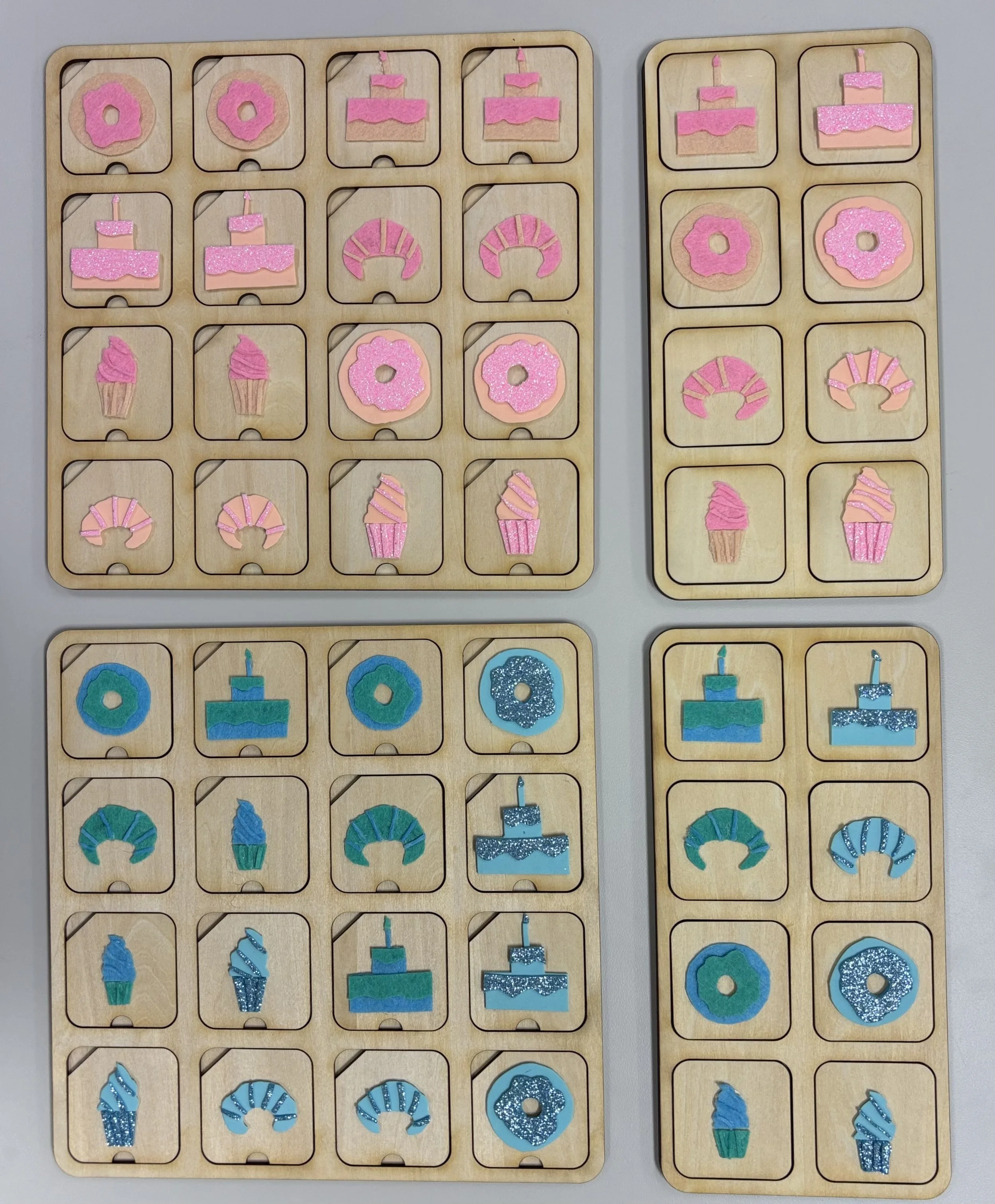
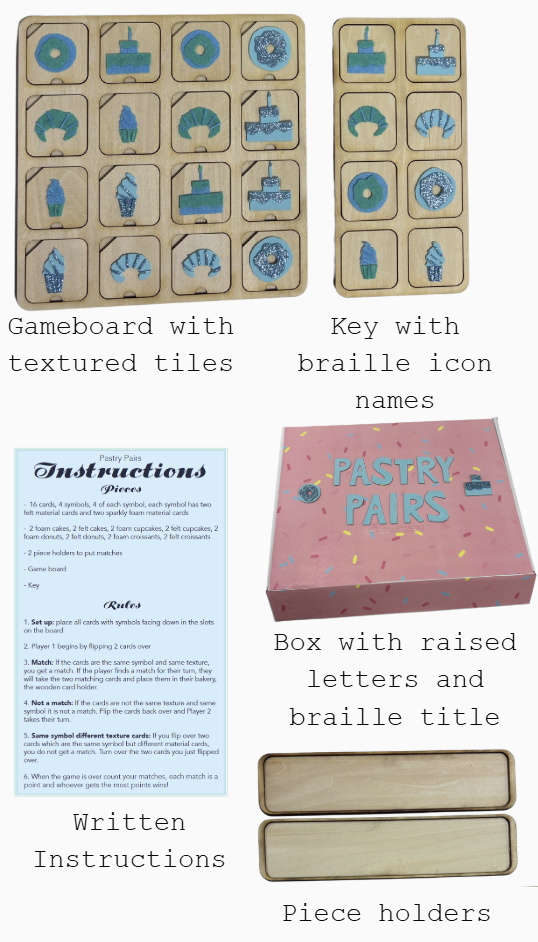
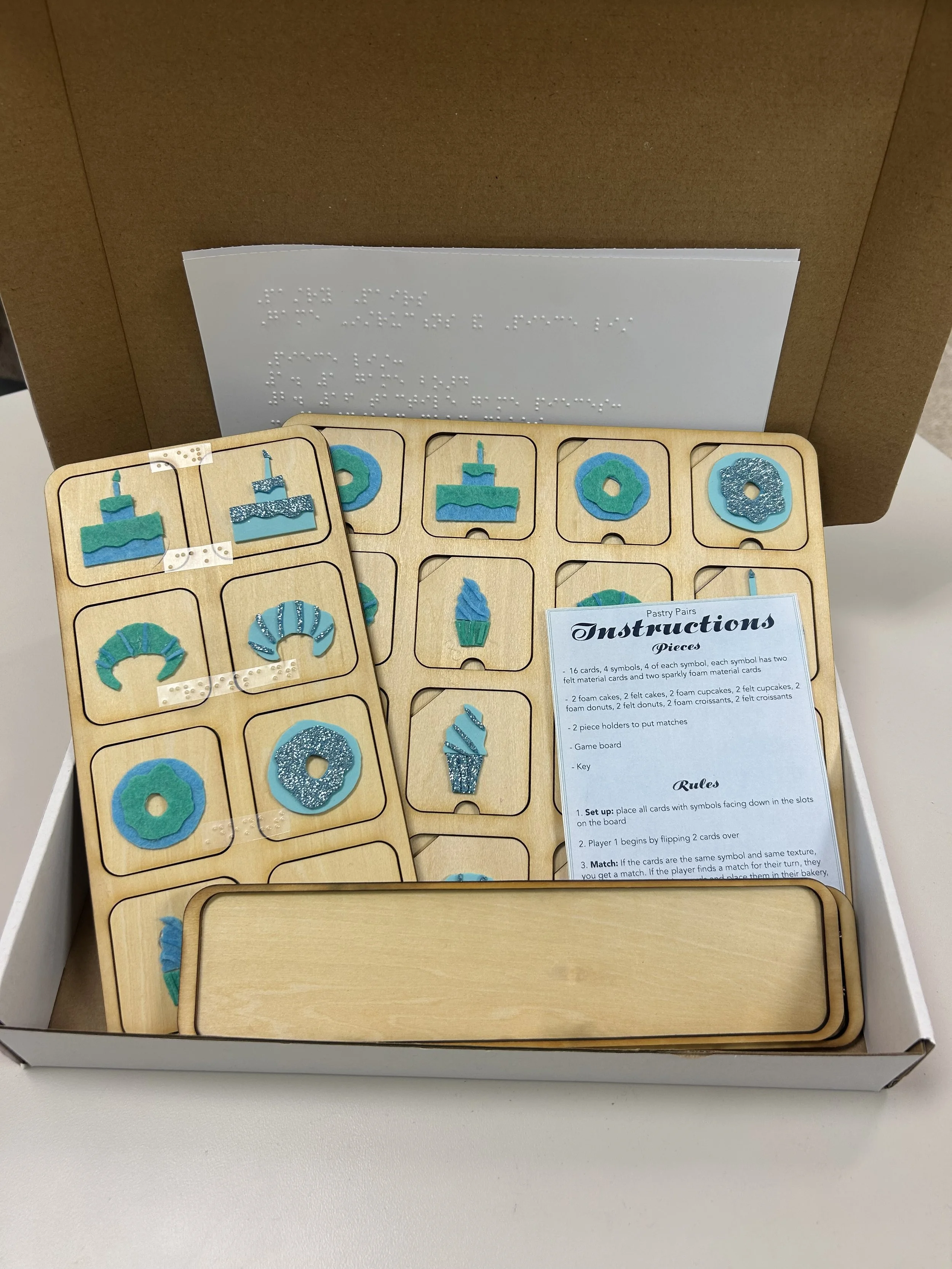
1 game board with a cut corner for orientation
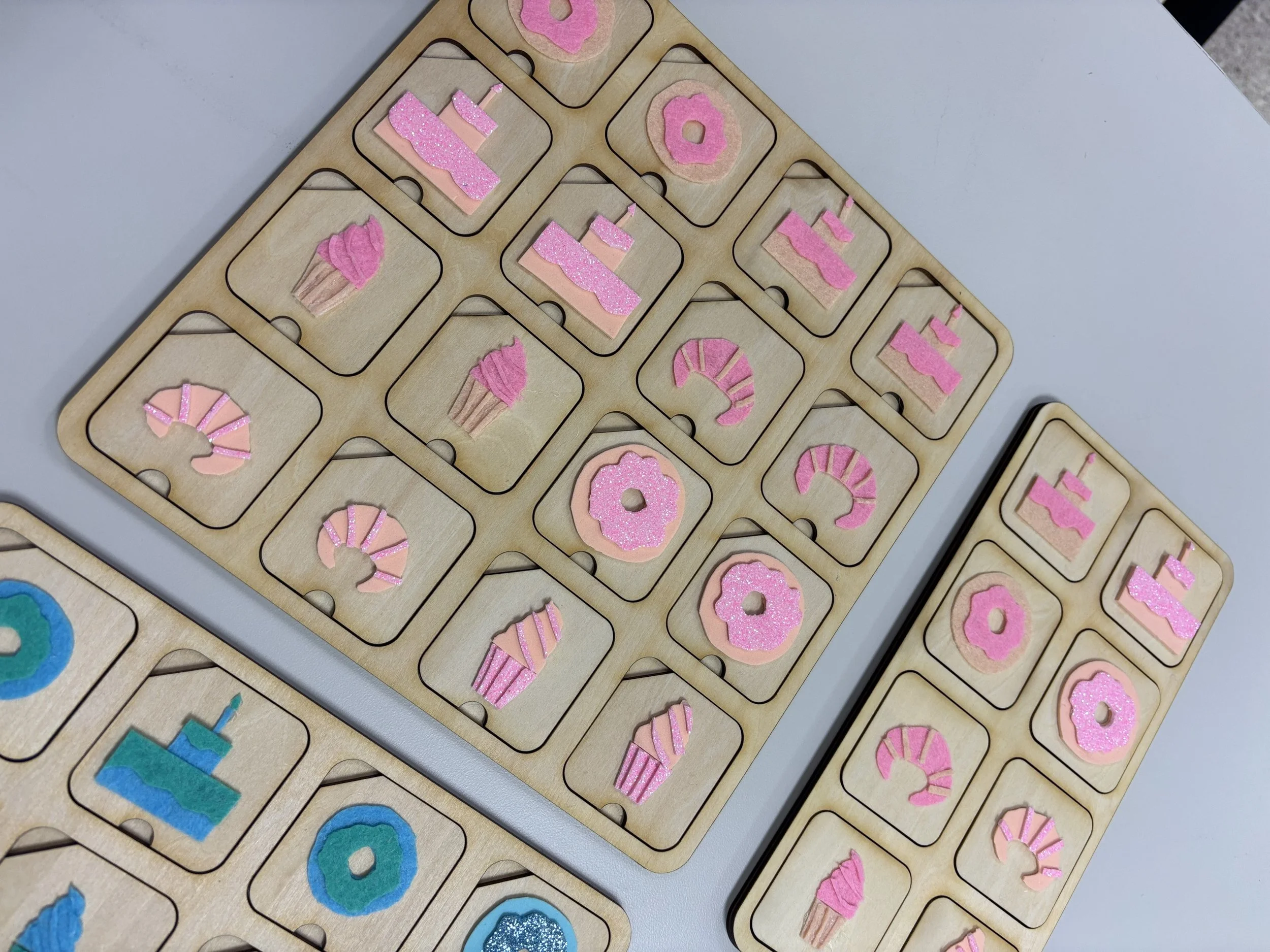
16 tactile pastry pieces:
2 sparkly foam cakes & 2 felt cakes
2 sparkly foam cupcakes & 2 felt cupcakes
2 sparkly foam donuts & 2 felt donuts
2 sparkly foam croissants & 2 felt croissants
2 wooden trays for holding matched pairs (“your bakery”)
1 tactile key with foam/felt pastries and braille labels
Braille instructions and printed text instructions
-
The cut corner on the board and cards helps players align pieces correctly.
Rounded cutouts along the bottom edge make cards easier to pick up.
Symbols are paired with distinct textures to ensure clear tactile recognition.
Poster
-
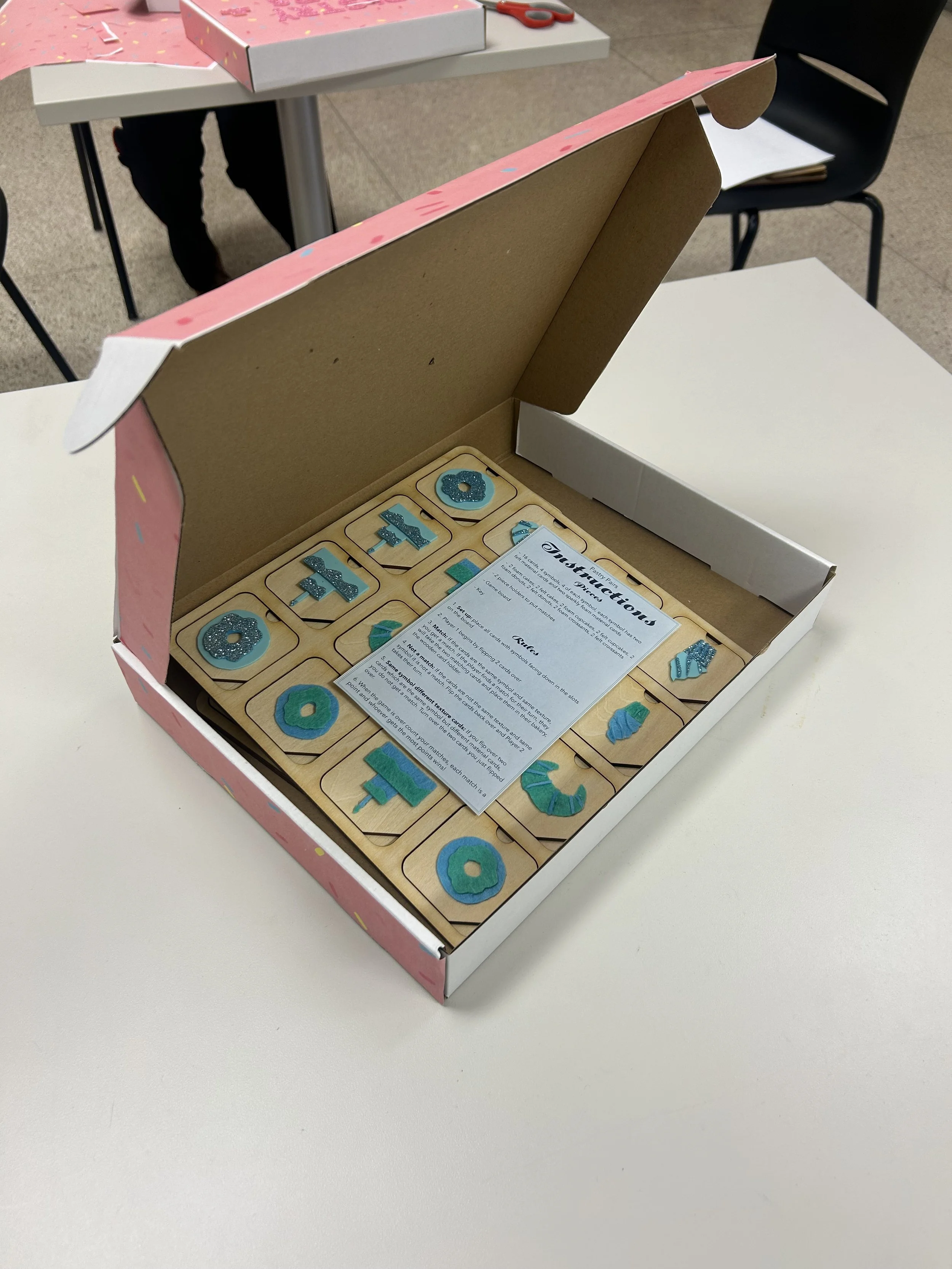
Matches must be the same symbol and texture.
Same symbol with different textures = not a match.
Use the tactile key to learn pastry symbols before playing.
Place matched pairs in your tray to stay organized.
Count matches at the end; most points wins.
-
Texture contrast: Each pastry symbol is made with different materials to maximize clarity.
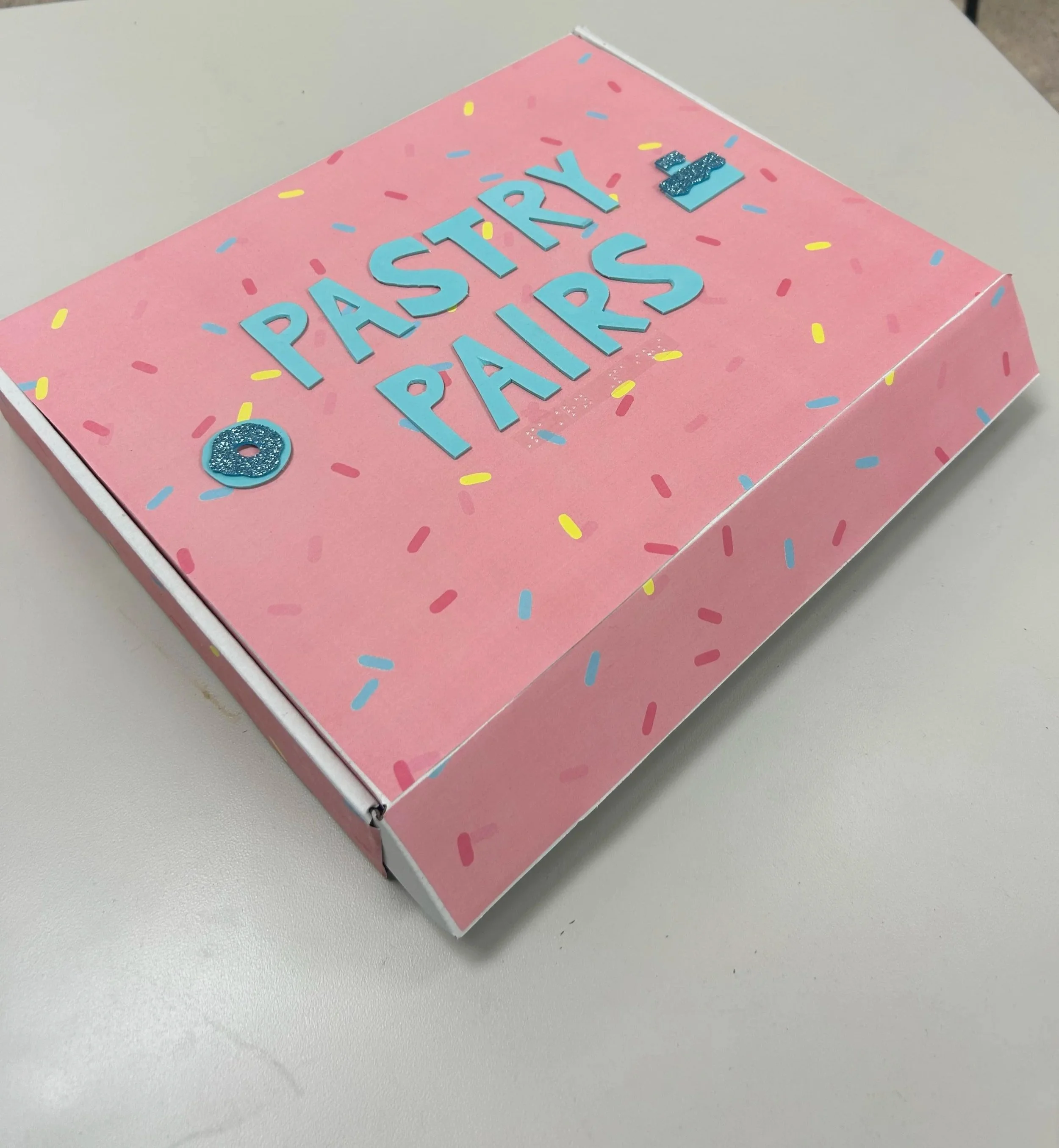
Braille integration: A tactile key connects textures with braille labels, supporting literacy.
Ease of handling: Orientation cues and cutouts make gameplay smooth and independent.
Inclusive play: Designed for both blind and sighted players to participate equally.
design brief
Design an interactive educational experience for the visually impaired. This must be grounded in tactile research design and will be designed alongside a blind co-designer for feedback and support. This will also utilize the resources at the Center for Inclusive Design and Innovation.